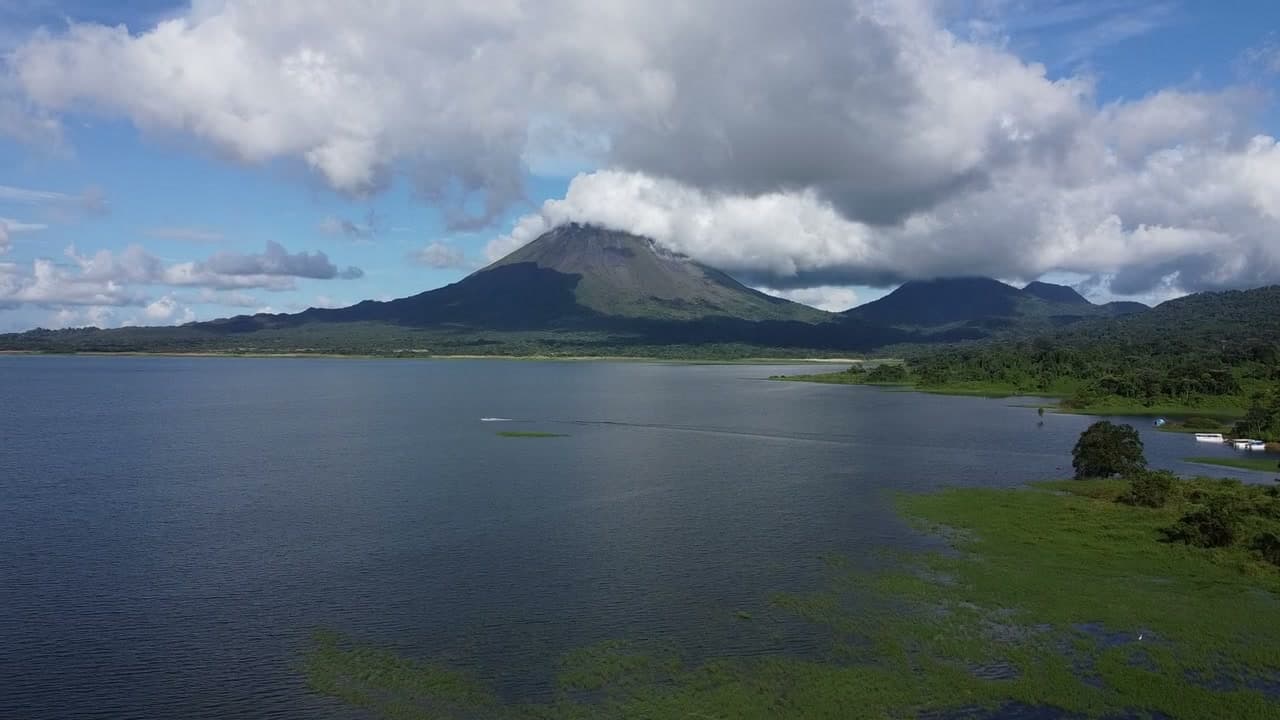
A single market, no matter how strong, doesn't protect. Geographic diversification across Argentina, Costa Rica, and the United States builds a portfolio that survives economic cycles beyond your control—and captures each market's opportunity at the right moment.
Article index↓
"A single market, no matter how strong, doesn't protect. True wealth security is built through geography."
— Principle of transnational portfolio diversification
The question every investor should ask themselves
How much of your assets are tied to the same currency? To the same central bank's decisions? To the same economic cycle?
If the answer in all three cases is "all of it," your portfolio isn't diversified. It's concentrated. And concentration, in volatile environments, isn't strategy—it's exposure.
Geographic diversification in real estate isn't an academic concept. It's the decision investors with established wealth make when they want their portfolio to survive cycles they can't control.
AR
Argentina
Capital appreciation in USD, undervalued assets due to macro context, strong domestic demand
CR
Costa Rica
USD cash flow, dollarized economy, growing international tourism
USA
United States
Deep market, liquidity, access to financing, and property rights protection
Why three markets and not one
The logic of diversifying between Argentina, Costa Rica, and the United States rests on the fact that these three markets have uncorrelated economic cycles. When one faces pressure, the other two may be in expansion.
But there's more to it:
Argentina offers assets valued in dollars far below their fundamental worth. The macroeconomic context creates buying opportunities that don't exist in stable markets. The investor who understands Argentina buys at a discount what others can't access.
Costa Rica offers stability and immediate cash flow. A dollarized economy, robust legal system, sustained tourism growth, and no exposure to Latin American currency risk. It's the income-generating asset that finances the rest of your portfolio.
The United States offers the world's deepest and most liquid market. Higher entry cost, lower unit returns, but maximum capital protection and access to local financing to expand your position without compromising liquidity.
"The transnational portfolio doesn't maximize the return of a single asset. It optimizes the risk of the whole." — Framework of wealth investment theory
The AR + CR portfolio model (what R&H operates)
Raíces & Horizontes works across two markets simultaneously. This allows us to propose to investors a combination that, in its simplest form, is structured as follows:
Profile A — Appreciation + Cash Flow
AR Asset
Land or chalet in Mar de las Pampas. Capital appreciation plus seasonal rental income.
CR Asset
Eco-lodge or villa at Lake Arenal. Monthly USD cash flow all 12 months.
The CR asset finances the AR asset's off-season expenses.
Profile B — Sectoral Diversification
Vacation Asset
High unit rate, seasonal rental income, exposure to luxury tourism.
Corporate Asset
Long-term contract in USD, institutional tenant, stable base cash flow.
The corporate asset provides a safety floor; the vacation asset offers seasonal upside.
How to think about USA exposure from Latin America
For the Latin American investor, real estate investment in the United States operates on a protection logic more than a return maximization one:
- Portfolio dollarization without depending on local monetary policy
- Access to financial markets that amplify with property ownership
- Legal diversification: assets under American law operate with different institutions than Latin American counterparts
- Exit liquidity: the U.S. real estate market has the depth to sell in reasonable timeframes
R&H does not operate directly in the U.S., but maintains connections with brokers specialized in the Latin American investor segment in Florida, Texas, and Georgia—markets with high demand from Spanish-speaking buyers and unrestricted access for non-residents.
The most common mistakes in real estate diversification
✗ Diversifying by geography alone without considering return profiles
Having an asset in three different countries isn't diversification if all three generate cash only during high season.
✗ Buying in unfamiliar markets without local infrastructure
A Costa Rica asset without a local manager is a poorly managed asset. Distance amplifies operational problems.
✗ Ignoring the liquidity profile of each asset
Not all real estate assets sell on the same timeline. Your portfolio should account for exit horizons from the moment of purchase.
R&H's role in portfolio construction
Raíces & Horizontes doesn't sell individual properties. We analyze each investor's profile—their timeline, risk tolerance, liquidity needs—and propose a combination of assets that builds a coherent portfolio aligned with those parameters.
This diagnostic work is complimentary, confidential, and without obligation.
✦ Principles of the transnational portfolio
- Geographic diversification is not a luxury: it's the most effective wealth protection mechanism in volatile macroeconomic environments
- Combining an appreciation asset (Argentina) with a cash-flow asset (Costa Rica) builds resilience without sacrificing returns
- Access to markets like the U.S. doesn't require large capital: the right structure enables exposure from accessible amounts
- The right advisor isn't the one who sells the available asset—it's the one who designs the combination suited to your specific profile
Investor frequently asked questions
Raíces & Horizontes
Let's design your transnational portfolio
A confidential conversation to understand your profile and propose the right combination. No obligation.
Start the conversation →Raíces & Horizontes
Interested in what you read?
Let's talk. Our team responds in under 2 hours.
Talk to an advisor →